
By Scientists, For Scientists.
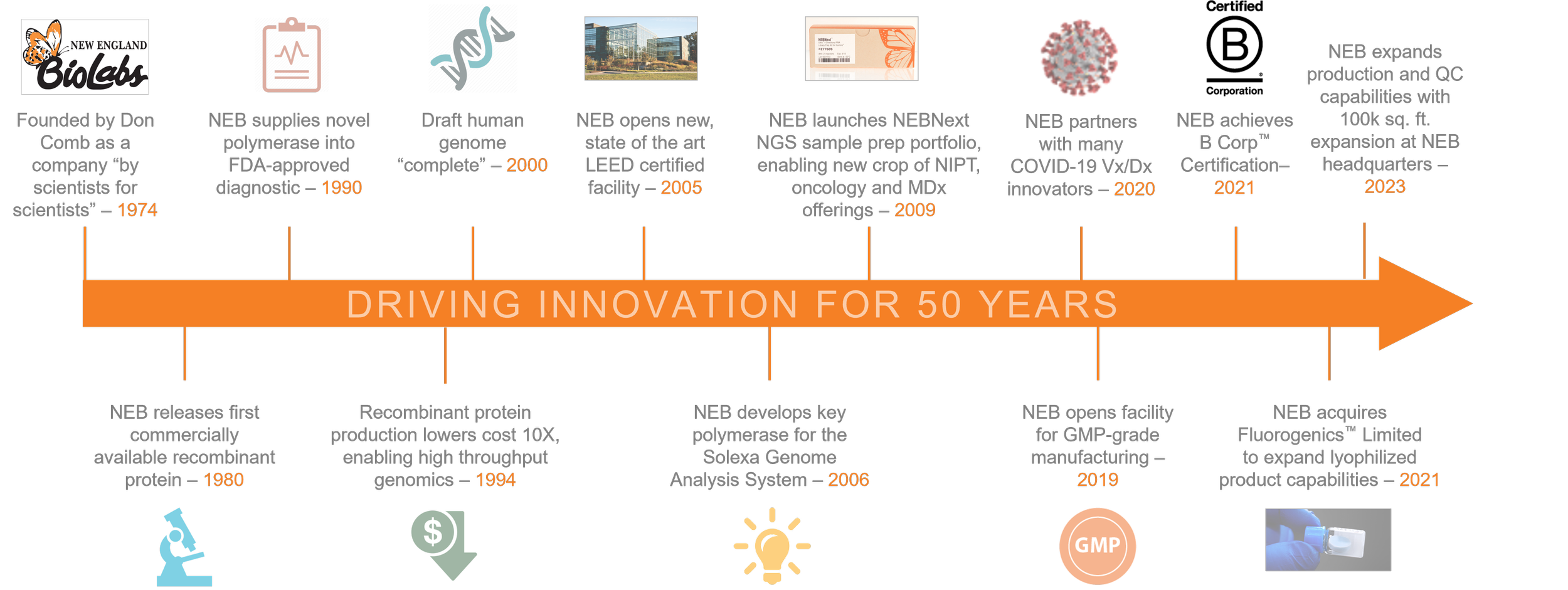
From enzymes to insights, NEB has been driving innovation for over 50 years.
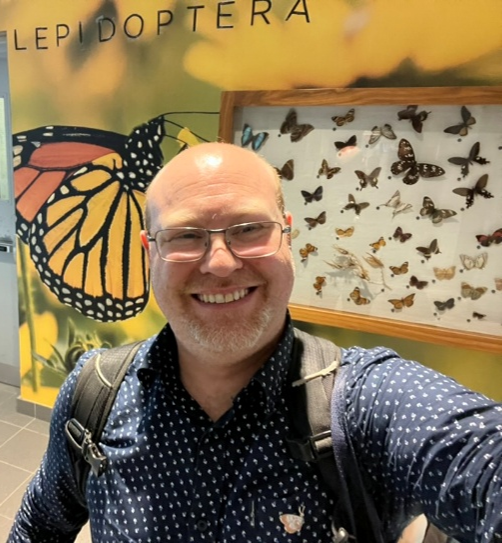
Can you introduce yourself and how you joined NEB? How did you transition from academia to the industry?
My original plan was getting a PhD in biology and becoming a university professor. As I progressed through graduate school, I realized that maybe life as a professor was not my ideal career. As I got closer to the end of my PhD, I started thinking about a career in the biotech sector. After graduation I got a job a biotherapeutic company, where I was a research associate and eventually became a research scientist.
While I enjoyed my time as researcher, I started to think that sales might be the next step in my career. When I started working at NEB, the transition from working at the bench to talking to people working at the bench was challenging. But the more I did it, the more comfortable I became talking to researchers and 13 years later, I am still enjoying discussing science with my customers.
How did NEB contribute to the synthetic biology field?
NEB has played a significant role in advancing synthetic biology by providing many of the foundational tools that underpin modern DNA engineering, including restriction enzymes, Taq polymerase and high-fidelity polymerases. The company has continued to drive innovation with technologies such as eBuilder HiFi DNA Assembly, Golden Gate Assembly, and cell free protein expression, enabling faster, more accurate and more efficient DNA design, assembly and cloning.
Beyond its products, NEB has supported the research community through a wealth of application notes, protocols, educational resources and outstanding technical support, helping scientists successfully implement new technologies and accelerate their research. By maintaining both a strong research division and an applications development team, NEB has consistently translated scientific discoveries into practical solutions that have helped drive progress across the synthetic biology field.
How are you involved in Canada’s research ecosystem?
Having spent more than 13 years supporting researchers in ON and MB with New England Biolabs, I've had the opportunity to work closely with academic, government, healthcare and biotechnology laboratories. NEB Canada has maintained a dedicated Canadian presence for more than 35 years, providing local scientific expertise, technical support and training tailored to the needs of Canadian researchers.
Our commitment to Canada's research ecosystem extends beyond products. We support innovation through initiatives such as our Biobar freezer program, with more than 30 freezers located in research institutions across the country, as well as sponsorship of undergraduate iGEM teams and other student-led research activities. We also help researchers establish and grow their programs through our New Lab Discount Program for newly hired academic investigators and emerging biotechnology companies, and through student starter packs designed to support graduate students as they begin their research careers.
In addition, NEB recognizes and invests in the research community through programs such as the Passion in Science Awards and Monarch Awards, while maintaining strong engagement with universities and research institutes through seminars, workshops, conferences and one-on-one scientific support. For me, the most rewarding part is helping Canadian scientists access the tools, expertise, and resources they need to advance discovery and innovation.
Where do you see the SynBio field going in the coming years? What are you most excited about?
I see the next big advances in synthetic biology coming from the convergence of AI-driven biological design, cell-free systems, engineered cell therapies, and increasingly automated DNA assembly and testing workflows. As our ability to design, build and learn from biological systems improves, we're moving from simply editing genes to programming biology in a much more predictable way. Customers are already working in this space and using the groundbreaking reagents and application notes from NEB to clone, amplify, express and characterize proteins in a high-throughput manner, faster than ever.
What excites me most is the potential to create more sophisticated biological circuits and engineered organisms that can address real-world challenges in medicine, sustainable manufacturing, agriculture and environmental remediation. The field is also becoming more accessible through improved tools such as high-fidelity DNA assembly methods, automation and machine learning-guided design.
Looking ahead, I expect synthetic biology to become increasingly integrated with AI and robotics, enabling rapid design-build-test-learn cycles and accelerating the development of novel therapeutics, biomaterials, and biomanufacturing processes. The pace of innovation is only increasing, and the opportunities to solve meaningful global problems are tremendous.
Interviewer: Martin Chenal