
Western Synthetic Biology Symposium 3.0
The third annual Western Synthetic Biology Symposium was the largest yet, with over 150 attendees, 30 posters, and oral presentations throughout the day. Although focused on synbio research happening in southwestern Ontario, there were speakers from both industry and academia from across Ontario and Quebec.
Benjamin Scott - August 31, 2018

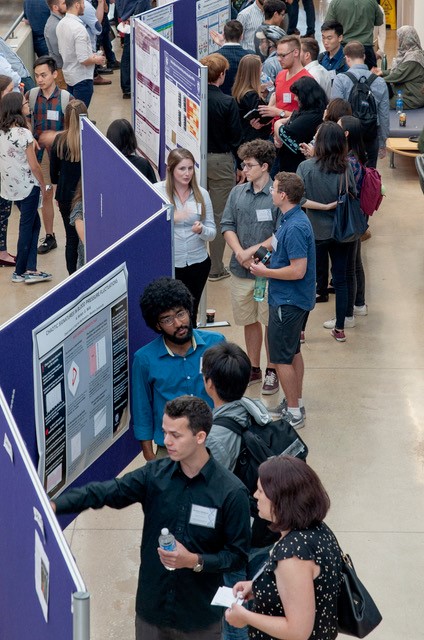
Poster presentations at the Western Synthetic Biology Symposium 3.0. Image courtesy of Dr. Kathleen Hill.
The third annual Western Synthetic Biology Symposium was the largest yet, with over 150 attendees, 30 posters, and oral presentations throughout the day. Although focused on synbio research happening in southwestern Ontario, there were speakers from both industry and academia from across Ontario and Quebec. Dr. Cintia Coelho traveled the furthest, all the way from the University of Braslia, to present her work on using integrases for genome engineering, and highlighting the truly international scope of synbio research.
The day was kicked off by industry talks, where representatives from Ontario companies Specific Biologics, Designer Microbes Inc., and Ardra Bio discussed their exciting technology and spoke enthusiastically about their collaborations with Canadian universities. The US company SGI-DNA also showcased their new BioXp 3200 “DNA printer”, which automatically constructs custom DNA fragments as large as 1.8kb. Western University recently acquired one of these machines, which costs up to $65K/year to maintain. But, Dr. Karas (Western University/Designer Microbes Inc.) was quick to point out that by splitting costs between labs, access to this machine is relatively affordable. In addition, synthesizing DNA directly enables the design of complex DNA libraries, saving time and money versus traditional molecular biology techniques.
Next, Dr. Jordan Thomson from Ontario Genomics hosted a panel discussion on the “Present and Future State of SynBio in Canada”. This discussion built on the Canada Synthetic Biology 2018 conference in March, also hosted by Ontario Genomics. Featuring a panel of professors and postdocs from four different Ontario universities, the wide-ranging panel discussion is summarized in a companion article (read about it here).
Dr. Rebecca Shapiro (University of Guelph) gave the keynote presentation, and presented her exciting work on developing functional genomic tools to study pathogenic fungi. Shockingly, the number of deaths per year due to fungal infections is equivalent to HIV/AIDS, but the development of new anti-fungal compounds has lagged in recent years. She described her use of CRISPR gene drives to stably engineer these otherwise difficult to study fungal strains, which is a resourceful new tool for understanding these pathogens.

Dr. Rebecca Shapiro (University of Guelph) giving the WSB 3.0 keynote presentation, on her work to identify drug targets in pathogenic fungi using synthetic biology tools. Image courtesy of Western SynBio Symposium.
The day was capped with presentations from graduate and undergraduate students, representing the newest generation of synbio researchers in Canada. Excitingly, Western University is launching its own synthetic biology training program at the undergraduate and graduate levels, the first of its kind in Ontario. Members of the student-led Western Synthetic Biology Research Group (WSBR) discussed their efforts to promote and launch this program, which gained momentum due to strong student interest. The WSBR is now leading an undergraduate research program, focused on experiential learning in synbio. This example of student leadership paired with support from professors is an inspiration for other synbio programs across the country! (read the SynBio Canada article about the WSBR here)
Dr. David Edgell gave concluding remarks, expressing his excitement about the growth of synbio in Ontario. He also called for ideas on launching a “grand challenge”, which could be solved through collaborative efforts by researchers in southwestern Ontario. This enthusiasm perfectly summarized the conference, where the growth of local synbio research programs is leading to exciting new opportunities for southwestern Ontario and beyond.
Conference organized by: Drs. David Edgell, Bogumil Karas, Kathleen Hill. Conference website, list of sponsors
For more photos, see the Western Synthetic Biology Symposium twitter account.

Quick Chat: Waterloo Professor Dr. Trevor Charles
This month we discuss synbio, regulation, and science advocacy with Professor Trevor Charles. Dr. Charles has been a professor in the department of biology at the University of Waterloo for 20 years and has been a strong advocate for synthetic biology research, both at Waterloo and in Canada. He is also the co-founder and CSO of Metagenom Bio Inc., which develops and commercializes microbiome solutions in environment and agriculture.
Nathan Braniff - July 13, 2018

Dr. Trevor Charles is a professor at the University of Waterloo. He is also the co-founder and CSO of Metagenom Bio Inc., and director of the Waterloo Centre for Microbial Research.
This month we discuss synbio, regulation, and science advocacy with Professor Trevor Charles. Dr. Charles has been a professor in the department of biology at the University of Waterloo for 20 years and has been a strong advocate for synthetic biology research, both at Waterloo and in Canada. He is also the co-founder and CSO of Metagenom Bio Inc., which develops and commercializes microbiome solutions in environment and agriculture. He received his PhD in molecular biology under Prof. Turlough Finan at McMaster, studying the genetics of Rhizobium meliloti. His current research continues to focus on the study Rhizobium species and interactions with their eukaryotic hosts. His group has also developed novel functional metagenomics methods and in 2015 he received an Ontario Genomics SPARK award to engineer biological approaches for the recycling of waste methane into bioplastics. He recently became the director of the Waterloo Centre for Microbial Research (WCMR), a new multidisciplinary initiative using microbiology to benefit the economy, environment and human health. He is also very active with science advocacy and outreach on twitter and can be found @trevorcharles.
How would you define synthetic biology, in one or two sentences, for a lay reader?
Definition is one of the hardest things about synbio. It is one of those things that you either intuitively understand, or don't get it at all. I think that is one of the problems in getting the message out to outsiders. I very much like the idea of applying engineering principles to biology, with a strong implementation of technology such as gene synthesis, gene editing, and genome engineering.
Could you explain some of your recent research related to synthetic biology?
I am a bacterial geneticist, so I like to think that I have been working in synthetic biology since before the term was coined. The great thing about bacteria is that you can manipulate the genome at many different levels. For example, my grad work involved making large genome deletions with defined endpoints. We have also developed ways to stably integrate DNA segments into defined regions of bacterial genomes, and to produce bioplastics with novel properties, in some cases using DNA isolated from metagenomic libraries. Some new work involves engineering methanotrophs to produce bioproducts using methane as carbon source. This is interesting because methane is a potent greenhouse gas, and is also one of the least expensive carbon sources, being produced in wastewater treatment plants, landfill sites, biogas plants, as well as being present in abundant natural gas reserves.
Do you think that the synthetic biology research output from Canada has kept pace with other countries or is Canada falling behind? What needs to change? Are there any advantages that Canada offers?
Definitely not. We have very little synthetic biology research in academia, and hardly any commercial activity. There is lots of interest, for example through iGEM, but it hasn't really caught on at other levels. I don't know what advantages Canada could offer. We certainly don't have any presence on the international stage. A bold move would be for a funding agency to allocate funds towards unfettered synbio research, with no requirement for co-funding for industry partners. As it stands, there is very little capacity for synbio in this country, because it hasn't been supported by research funds. As an example, one might have expected the Genome Canada Disruptive Innovation in Genomics competition to be dominated by synthetic biology. This was not the case. Canada has lots of potential, but limited developed capacity.
Do you feel that the Canadian regulators and funding agencies strike the right balance between supporting progress in synbio vs limiting the risks involved in a new field? If not, where can Canada improve and are there other countries with funding/regulatory models we might look to for examples?
The focus should be on funding scientific research rather than studies on risk. We will never develop a strong synbio community by focusing on risk. And focusing on risk will give Canada a reputation of a precautionary jurisdiction to be avoided for synbio investment. Not a good idea. Just look at what has happened with Europe and agricultural biotech. The stifling regulatory climate there strangles biotech development.
You have an active twitter presence where you regularly post about scientific topics. In your opinion how important is outreach and public education to the success of synthetic biology and the potential GMO products it creates? Do scientists communicate enough?
Outreach is incredibly important. But there will be limited success in trying to educate the public about the safety of GMOs and synthetic biology. What really needs to be done is to get people to be enthusiastic about science in general, and to understand how science is carried out. What are scientists excited about, and why? What technical developments arise from scientific advances? What is the role of serendipity in science? Application of science to challenges in agriculture, health and environment, and how it makes our lives better. Canada has an unenviable record of harbouring fierce critics of biotech, such as CBAN and ETC. In some cases there are close links between these anti-science groups and some academics in Canadian universities. A campaign by CBAN was instrumental in killing the Enviropig project, based at University of Guelph. Ironically, the Enviropig was developed to reduce environmental impact of raising swine, and many the fiercest opponents considered themselves to be environmentalists. Arctic Apple and Aquadvantage Salmon were developed in Canada, and should be celebrated as Canadian innovations, but how often do we hear about them in a positive context? It is remarkable that they were able to make it through the regulatory process. Hopefully, the regulatory system will evolve along with the application of new genome editing technology, and new traits will make it to market in an efficient manner.
Are you optimistic about synthetic biology in the future or do you feel it has been over-hyped? Is there any specific industry where you think synthetic biology research is currently making a real commercial impact?
Yes and no to hype. But I think the general public is surprisingly unaware of synthetic biology. The industry that I think has the greatest potential to benefit in the short term is agriculture, both plant and animal.
In the long term, what do you see as the biggest obstacle to the goals of synthetic biology? Do you think synthetic biology/bioengineering will ever resemble other more mature engineering disciplines (ie mechanical, civil, electrical)?
Biology is complex. The biggest challenge is how to deal with and overcome this complexity. Hopefully there will be opportunities for Canadian scientists to address these challenges.
Do you have any suggestions as to the future steps SynBio Canada can take to promote synbio research in this country?
I think raising public awareness about synthetic biology and its potential applications is important. Op-eds, newspaper and magazine articles, radio and TV interviews, and social media are all activities that could contribute to this. Perhaps SynBio Canada might be able to coordinate some of this.

Addressing Biosecurity Threats in Synthetic Biology
Although the potential for cell-free platforms is high, it is necessary to address the potential misuse of cell-free systems and develop a strategy to mitigate the threat of suspicious users. This is where Chris Isaac, a member of the U of L iGEM team, comes in. Isaac identified that the flexibility of cell-free systems makes them highly amenable to genetic recoding, where canonical relationships between codons and anticodons are not necessarily consistent.
Taylor Sheahan - June 20, 2018

Chris Isaac at the Meeting of States Parties to the Biological Weapons Convention (BWC) in Geneva, Switzerland.
In 2017, the University of Lethbridge Collegiate iGEM team aimed to lower barriers to synthetic biology to the public, by developing a modular and safe cell-free platform. Cell-free approaches to biological engineering provide a promising alternative to cell-based systems. This is due to their reduced complexity and potential for bio-contamination, as wells as novel engineering capabilities, such as the ability to incorporate non-canonical amino acids and toleration of toxic compounds. Due to the inherent safety of cell-free platforms, the team envisioned such a system would provide a powerful tool as an educational platform, which could be used to teach students the basics of synthetic biology. Additionally, the cell-free platform would be accessible to the public, enabling "DIY" enthusiasts and biotechnology start-ups.
Although the potential for cell-free platforms is high, it is necessary to address the potential misuse of cell-free systems and develop a strategy to mitigate the threat of suspicious users. This is where Chris Isaac, a member of the U of L iGEM team, comes in. Isaac identified that the flexibility of cell-free systems makes them highly amenable to genetic recoding, where canonical relationships between codons and anticodons are not necessarily consistent. Thus, there is the potential for dangerous users to “encrypt” sequences that, when synthesized using a novel genetic code, will produce a harmful compound. To address this threat, Isaac aimed to develop software that would identify recoded sequences to ensure that they will not be synthesized. At the 2017 iGEM Giant Jamboree, Isaac and the team were acknowledged for their ability to identify biosecurity risks associated with cell-free systems, as well as for their initiative taken to develop mitigation strategies.
Building on the momentum from the Giant iGEM Jamboree, Isaac was selected along with four other students to travel to the UN campus as an iGEM delegate. In the winter of 2017, the delegates attended the intersessional Meeting of the States Parties to the Biological Weapons Convention (BWC) in Geneva, Switzerland.
“At the convention, we were able to attend the plenary sessions and listen to statements made by the parties” says Isaac. “While these statements appeared to be largely formality, they were in fact glimpses into long-standing issues, brief remarks on current events, and calls to action for the continued support of the BWC.”
The delegates had the opportunity to discuss biosecurity and synthetic biology with representatives from around the globe, creating an open dialogue between young scientists and regulatory officials.
“The experience provided a great look into how governments prevent and control biological threats, and was also a good introduction to the non-governmental agencies who are working on these problems.”
Continuing his work towards addressing biosecurity threats associated with synthetic biology, Isaac received the Emerging Leaders in Biosecurity Fellowship at the Johns Hopkins Center for Health Security, which fosters the development of the next generation of leaders in biosecurity. Isaac is one of 28 individuals selected, and is also the youngest member of the 2018 class.

iGEM delegates, including Chris Isaac (second from Left), at the BWC in Geneva, Switzerland.
“I was thrilled to have been selected as a fellow and have since travelled to Washington, DC for the first fellowship meeting. We had the opportunity to meet with staff of the National Security Council on the White House campus and discussed national-level priorities for biosecurity, challenges, and the direction that biosecurity programs are headed.”
Currently, Isaac is a Biochemistry Master’s student at the University of Lethbridge in the lab of Dr. Athan Zovoilis. In addition to graduate studies and the fellowship program, he is participating in his 7th year of iGEM, as well as continuing to develop his biosecurity software suite.
“With both of these experiences combined, my most important takeaway is two-fold. First, there are great people working on issues of biosecurity from all sides, they come from all walks of life, and work at all levels of administration; international, national, state, provincial, academic, and non-governmental. Secondly, it reaffirms my belief that scientists need to be more involved with government, and communicate outside of academic or industrial silos. We should be seriously considering dual-use implications for even basic research that might enable other unrelated technologies to be used improperly”.
Taylor would like to thank Chris Isaac for sharing his experience.
Quick Chat: MIT Postdoc Dr. César de la Fuente Nunez
“I engineer biological systems (such as tiny proteins) to make novel potential medicines. One of the global health challenges I have targeted through my research is that of antibiotic resistance. With my collaborators around the world, I have provided an array of solutions to combat drug-resistant infections.”
BENJAMIN SCOTT - MAY 13, 2018
As part of SynBio Canada’s continuing efforts to grow the synthetic biology community, we’ve begun reaching out to researchers both in Canada and abroad. The reception has been incredibly welcoming, which has left us with an abundance of researchers to connect with. This article is the first in a series of Quick Chats, meant to highlight the diverse range of research interests and ideas within the community.

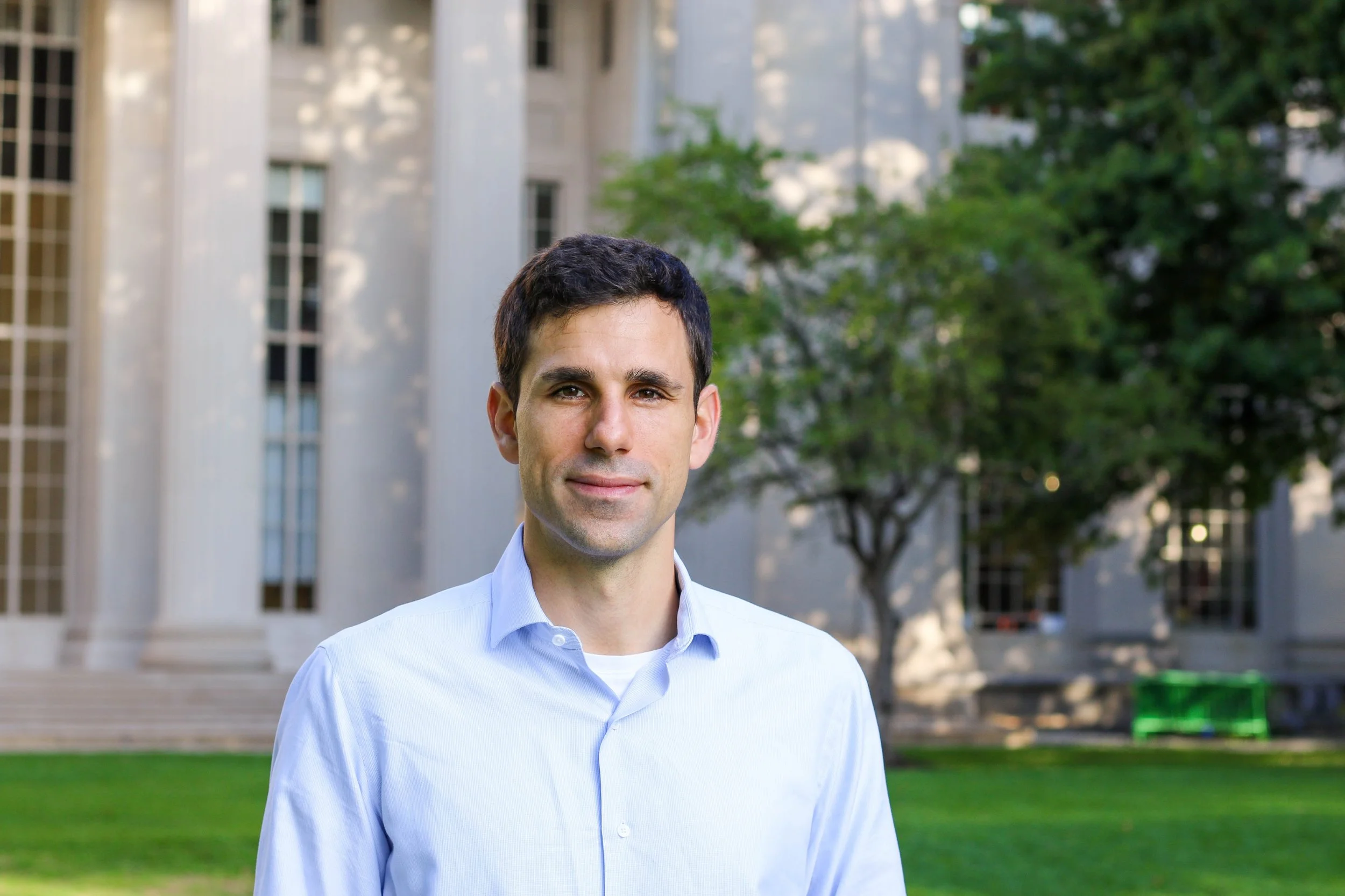
Dr. César de la Fuente Nunez, a Postdoctoral Associate and Ramon Areces Foundation Fellow at MIT, working with Prof. Timothy K. Lu.
Dr. César de la Fuente Nunez is a Spanish-Canadian synthetic biologist, where he received undergraduate training at the University of León, then moved to Canada to complete a PhD at the University of British Columbia. César is currently a Postdoctoral Associate and Ramon Areces Foundation Fellow working with Prof. Timothy K. Lu at MIT. He has a passion for both science and soccer, and with another MIT colleague he’s the coach and plays on the MIT FC.
César is interested in fostering a robust synthetic biology community, in Canada and abroad, so we sat down with him to discuss his ideas about the field.
Where does your interest in synthetic biology stem from? What are your working on right now?
I believe synthetic biology can be used to build truly innovative new technologies to solve real world problems. In my research, working at the intersection between synthetic biology and computational biology, I engineer biological systems (such as tiny proteins) to make novel potential medicines. One of the global health challenges I have targeted through my research is that of antibiotic resistance. With my collaborators around the world, I have provided an array of solutions to combat drug-resistant infections.
Your research background is incredibly diverse, from materials science, to genome editing, to microbiology. Where does synthetic biology fit into all of this?
Synthetic biology converges all these fields. I would argue this is the power of this emerging field, that it bridges different disciplines to create new technological tools and advances. Getting people from all these fields to interact, brainstorm and share ideas has been transformative and has enabled synbio to evolve into what it is today.
In what industries or applications do you foresee synthetic biology having the greatest impact in the next 10 years? What are you excited about?

Dr. de la Fuente Nunez recently published his work to create a yeast-based system for the rapid production of anti-microbial peptides. Link to paper.
Image: Ella Marushchenko, provided by Dr. de la Fuente Nunez.
The medical field. But I also foresee practical applications in bioremediation, energy and catalysis. At the moment, I am personally most excited and most personally invested in trying to translate synthetic biology-based applications into the clinic.
What programs or initiatives have worked well to support synthetic biology research?
I think the support from universities and governments is key here. In addition, I believe the field has benefited from conferences dedicated entirely to synbio, and to journals such as ACS Synthetic Biology from the American Chemical Society, which focus exclusively on this field.
MIT has a strong synthetic biology background, with a diversity of expertise. Is there something unique about MIT that has fostered this?
MIT was one of the first strong supporters of this new field, and this is clearly reflected in the institution. We have the MIT Synthetic Biology Center (where I work) that houses some of the most brilliant minds in the field, including some of its founding fathers. The interdisciplinary nature and lack of boundaries of MIT as a whole has definitely boosted the development of a strong synbio community.
Are there specific resources you would find useful for strengthening synthetic biology in Canada? What would make Canada more attractive for synthetic biology?
I believe combining efforts among groups interested in synbio, for example through regular meetings/conferences, etc. will certainly strengthen the synbio community in Canada. Having a genome foundry would be a great resource and strengthening ties with industry would also de highly desirable. Federal funding would also need to back up this emerging field. In the US, not only NIH, but also DARPA and DTRA among others have been instrumental in funding and supporting synbio efforts and initiatives.
How can the interdisciplinary nature of synthetic biology be better leveraged, and avoid isolating researchers into many individual departments? Have you faced any challenges communicating synthetic biology either to the public or to other academics?
Science is becoming increasingly interdisciplinary and collaborative, and I think the field of synbio has benefited from this. Most tools and scientific advances developed within the field of synthetic biology have a “real world” application. Therefore, I would argue that it is actually easier to communicate such advances to the public. Because the public can easily relate to the societal problems synbio is trying to tackle.
Synthetic biology is often characterized as a tool for conducting research, while others define it as a distinct field with a primary focus on applications outside of the lab. What’s your own definition of synthetic biology?
I see synthetic biology as a discipline of disciplines. A converging field that borrows concepts from classically distant or unrelated fields such as engineering, computer science and biology.

Engineering the Future of Gene-Editing Proteins
While the scientific community and now much of the public is excited about CRISPR/Cas9, some synthetic biologists like Western University’s Dr. David Edgell are working away at creating the next generation of DNA-editing tools. As Associate Professor and now Acting Chair of Western’s Biochemistry Department, Edgell is engineering nucleases “to make them bigger, better, stronger…more accurate, and having a more defined function.”
SAMIR HAMADACHE - APRIL 13, 2018
Nucleases: “Bigger, better, stronger”

Dr. David Edgell is the Acting Chair of the Department of Biochemistry at Schulich School of Medicine and Dentistry (Western University).
While the scientific community and now much of the public is excited about CRISPR/Cas9, some synthetic biologists like Western University’s Dr. David Edgell are working away at creating the next generation of DNA-editing tools. As Associate Professor and now Acting Chair of Western’s Biochemistry Department, Edgell is engineering nucleases “to make them bigger, better, stronger…more accurate, and having a more defined function.”
Edgell’s research began with asking basic questions about mobile genetic elements—DNA fragments capable of moving from one genomic position to another. They do this by using enzymes called homing endonucleases, which are nucleases that introduce double-stranded DNA breaks at precise sequences. “It quickly became clear that we could adapt this protein for genome-editing applications,” Dr. Edgell says. “So, over the past eight years, that’s what my lab has been really moving towards.”
Specifically, the Edgell Lab focusses on developing genome-editing nucleases for applications in various model systems. His latest creation? A fusion of Cas9 with I-TevI homing endonuclease, producing a dual nuclease termed TevCas9. The easy-to-use dual nuclease offers greater target-site specificity than Cas9 on its own and circumvents one of the biggest challenges of Cas9: regeneration of the target site.
“A lot of scientists realize the limitations of Cas9”
Despite its proven utility, The Cas9 nuclease confers a disadvantage upon CRISPR-based gene-editing. When Cas9 cuts DNA, a straight cut through the two strands of DNA leaves blunt ends. This promotes a DNA repair pathway called non-homologous end-joining (NHEJ), which “will simply take those blunt ends and jam them together, regenerating the Cas9 target site,” Edgell explains. However, since this repair pathway is imperfect, bases are occasionally lost or added in the process. Eventually the target sequence is disrupted, preventing further cleavage, and effectively knocking out the targeted gene.
It’s a messy process. The length and nature of base mutations at the target site depends on the rather unpredictable cycle of target site cleavage and regeneration. Dr. Edgell’s TevCas9 dual-nuclease, consistently deletes fragments of defined length. The fragment deleted is between the cut sites of each nuclease. After NHEJ repairs the break, the target site is lost, and the futile cycle is avoided altogether.
This allows for more reliable and predictable gene knock-outs. Another crucial gene-editing task is to perform gene knock-ins by inserting new DNA fragments at targeted locations. For this, a different DNA repair pathway is needed.
In order to insert a new DNA sequence at a DNA break, repair involving homologous recombination (HR) is required. As the blunt ends produced by Cas9 promote NHEJ, HR is promoted by a staggered cut that leaves overhangs instead. This is a challenge that many scientists are currently working to overcome. “The idea is to trick Cas9 into making ends that are not blunt ends, or to add another domain onto Cas9 to promote homologous recombination in some way,” says Edgell. “It’s kind of the next big holy grail in genome engineering.”
It’s not the only challenge Cas9 currently faces. Studies in recent months have discovered a pre-existing immune response to the Cas9 protein in adult humans. Although this presents an obstacle in gene therapy efforts, Edgell is optimistic that it’s a challenge that can be circumvented because Cas9 could be engineered to make it unrecognizable to the immune system. This would be done by modifying the epitope (3-dimensional surface structure) that antibodies are recognizing.
Advancing synthetic biology at Western University
In addition to engineering more useful nucleases, Dr. Edgell is collaborating with other scientists to apply nucleases like TevCas9 for synthetic biology applications.
One project with fellow biochemistry professors Dr. Greg Gloor and Dr. Bogumil Karas is aimed at using TevCas9 as a “molecular warhead” for high-precision control of microbiome populations. In effect, harmful bacteria can be targeted without damaging helpful bacterial populations. In addition to human health applications, this approach could be extended assist in industrial food production (such as yogurt probiotics) and environmental cleanups.
In another collaboration with Dr. Karas, Edgell is working to increase the utility of the algae P. tricornutum. This species of algae is a popular candidate for biofuel production, but Karas and Edgell think it is also very promising for the biosynthesis of other high-value products.
Outside of the lab, Edgell is working with other Faculty and Administrators to bring synthetic biology to the forefront at Western University. “I think there’s a lot of interest in synthetic biology at Western. [We] are trying to develop an umbrella structure to promote synthetic biology research.” Along with Dr. Kathleen Hill, Dr. Karas, and others, Edgell has applied for a large internal grant to formalize ongoing efforts such as an undergraduate synthetic biology module, a collaborative graduate program, and the annual summer Synthetic Biology Symposium.
“This is a really exciting time to be involved in synthetic biology. The promise of synthetic biology is massive.”
-Samir would like to acknowledge Rachel Boyd’s influential help editing this article.
Canada SynBio 2018 Day 2, Strategies for Strengthening Synthetic Biology in Canada
The second day of Canada SynBio 2018 was a smaller, closed-doors meeting to specifically discuss how to support and grow synthetic biology (synbio) in Canada. Members of the SynBio Canada Steering Committee (Laura and Ben) were fortunate to attend, to offer insight from early career researchers and students who are striving for dedicated support of synbio in Canada.
BENJAMIN SCOTT - MARCH 20, 2018
The second day of Canada SynBio 2018 was a smaller, closed-doors meeting to specifically discuss how to support and grow synthetic biology (synbio) in Canada. Members of the SynBio Canada Steering Committee (Laura and Ben) were fortunate to attend, to offer insight from early career researchers and students who are striving for dedicated support of synbio in Canada.

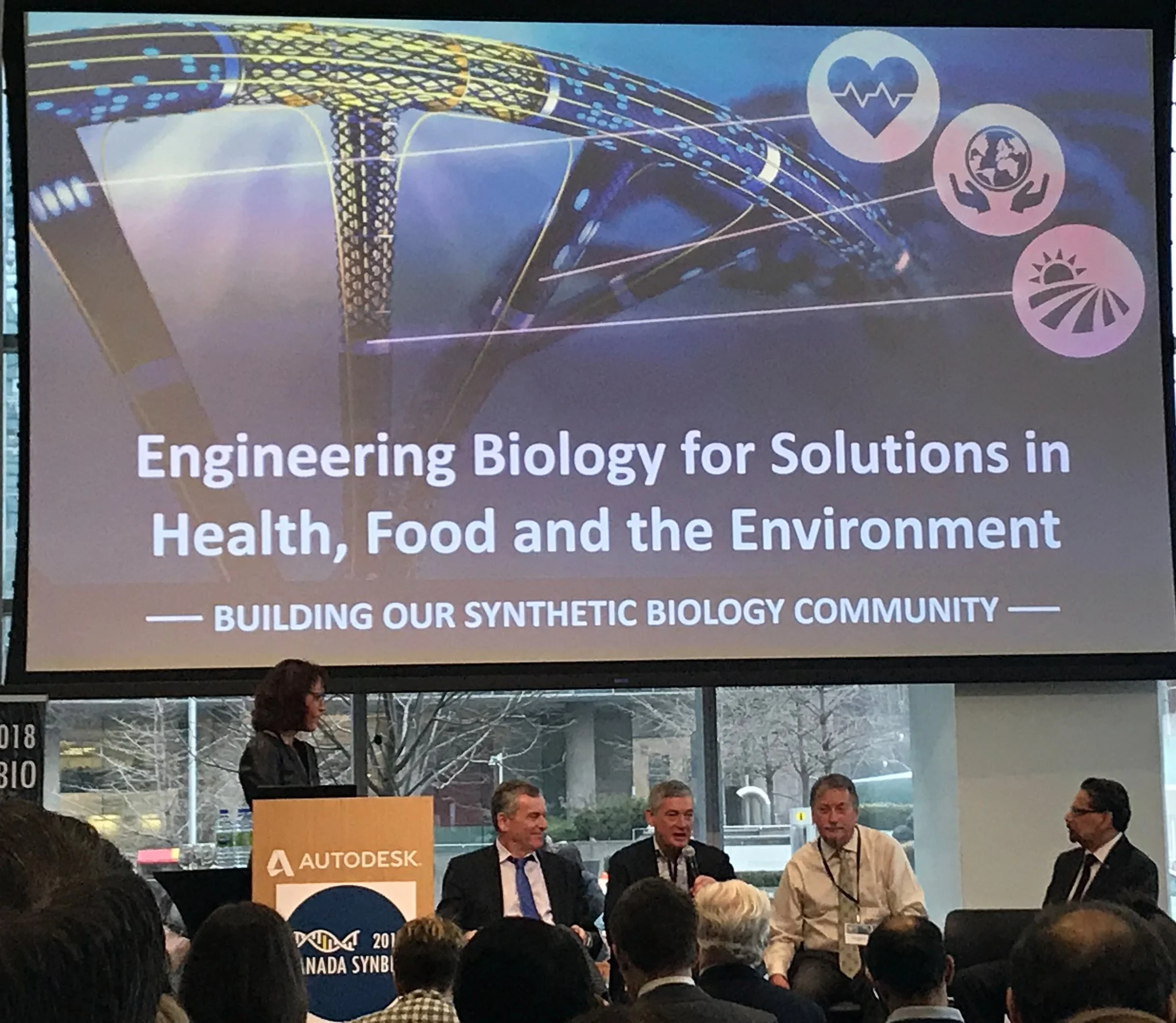
Funding Synthetic Biology Panel. From left to right: Bettina Hamelin, President and CEO, Ontario Genomics (Moderator); Marc LePage, President and CEO, Genome Canada; Paul Lasko, Director Institute of Genetics, CIHR; Ted Hewitt, President, SSHRC; Mario Pinto, President, NSERC. Image courtesy of Dr. Leslie Mitchell, NYU, Sc2.0 project.
Several times during the second day of the conference, the desire to identify and build the synthetic biology community in Canada was expressed. This is precisely the goal of SynBio Canada, and we’re excited to provide a platform for the research community to connect and collaborate!
Here we summarize the second day of enthusiastic discussion and debate surrounding the future of synthetic biology in Canada, to bring the suggestions and concerns of the participants to a larger audience. There were many fantastic ideas, which will also be further elaborated on by Ontario Genomics in a future white paper. Thank you to Ontario Genomics and ISED for hosting an engaging conference.
Highlights are presented in bold text for a faster read.
Richard Johnson, CEO of Global Helix, Director of iGEM Foundation and the Engineering Biology Research Consortium
Richard discussed the trends and efforts that have led to dedicated support for synbio in the US. Rather than the unique case of the UK, where support was government led, support for synbio in the US has come from a variety of sources. He organized his presentation into “synbio headlines”, with the key drivers for synbio support in the US.
- Biology has been made easier to engineer through the standardization of genetic “parts”. This has been successful for E. coli and yeast, but not yet for mammalian cells.
- Biotechnology contributes ~2.5% to the total US economy (approx. $500 M per year). Synbio is a convergence of biology and engineering, which DARPA has recognized as a major pillar of production and advanced manufacturing. This has lead to dedicated funding from several US federal sources, particularly the Department of Energy, DARPA, and NIST.
- Synbio is leading to new business models, and government can act as a key funder + de-risker through financial support for these new business ideas. Private investment will follow, and it’s growing rapidly.
- Synbio is advancing so fast that it threatens to overwhelm current regulations. Safety must be addressed from the outset of any project.
Vincent Martin, Co-Director of the Centre for Applied Synthetic Biology, and Professor at Concordia University
Vincent has been a strong and vocal proponent for synthetic biology in Canada. During his talk, he discussed his personal efforts at Concordia University to build their synbio capacity, and listed his ideas to strengthen the field at a national level.
- He opened with a frank discussion regarding the history of synbio support in Canada, or the lack there-of. Meetings in 2009, 2012, and 2014 have led to numerous suggestions, but little action at a national level.
- He also discussed the difficulty in maintaining support for an iGEM team. He discussed the increasing costs for participation in the iGEM competition and that it relies too heavily on volunteers for supervision and teaching. He called for institutional support for the iGEM concept, or perhaps a Canadian equivalent, which directly provides for undergraduate training in synthetic biology. He also expressed the need to provide a path for trainees to move from iGEM teams into a graduate project.
- Canadian universities must become better at developing biological engineering programs. He explained that students are desperately calling for this, but universities are slow to react.
- The solution that Vincent devised for Concordia, was to create the Centre for Applied Synthetic Biology (CASB), to gather expertise from various departments into the same institute. This was made possible thanks to an ambitious new university president, who called for proposals for clusters of research, to help a smaller university like Concordia become a leader in specific fields.
- Vincent also discussed his frustration with current funding panels in Canada, as they don’t recognize synbio as a distinct field. He also stated that NSERC simply doesn’t have a mechanism to fund an interdisciplinary synbio network (see later sections for the response from funding agencies).
- One of the components of CASB is a genome foundry, which includes automated equipment to rapidly assemble large pieces of customized DNA. He stated that the foundry is meant to act as a proof-of-concept in Canada, and they’re looking for collaborators to use it.
- He also expressed the need to better support the entrepreneurial talent of synbio researchers. Again, Concordia University is being very proactive with this, with the launch of their D3 innovation hub, and dedicated lab space which is soon to be built.
Specifically regarding the future white paper, which will summarize the ideas from the conference, Vincent offered this advice:
- Need a champion in government or an NGO, to ensure the proposals are acted upon. They should be impartial, not directly benefit from any proposed funding, and work to bring the community together. Mona Nemer, the Chief Science Advisor of Canada, seemed like a potential “champion”. (In the later breakout discussion groups, Vincent Martin was also discussed as a potential “champion”.)
- Who in government will a proposal/white paper be handed to? It’s not clear who at the federal level can act on these proposals. So, despite a wealth of ideas, the receptor of the white paper still needs to be addressed.
Following these presentations were a series of breakout sessions, to discuss key challenges and opportunities for synthetic biology in Canada.
Highly Qualified Personnel, Students, Skills, and iGEM
Challenges:
- Limited funding for multi-discipline research and “long shots”/big risk big reward projects.
- A need for a common forum for the community (which is what SynBio Canada wants to contribute to).
Opportunities:
- “Transdisciplines” where ethics, safety, social science informs the science being conducted. Jennifer Kuzma elaborates on this in her own article, stating that “I’m continually impressed by the Canadian ethos of diversity and inclusion---why should technological research and development be different? Canada has a prime opportunity to lead in the design and execution of responsible innovation for synthetic biology.”
- Connections between institutes, where the experiential-based learning of colleges and polytechnics could be paired with university programs, to provide direct experience in biotechnology.
Research and Access to Technology and Facilities
Challenges:
- Lack of core facilities. Canada’s expansive geography limits access, and there’s an uncertainty of what already exists.
- Grant review panels are not amenable to interdisciplinary grants.
Opportunities:
- Greater transparency of core facilities, such as the equipment available and how much it costs to use.
- A registry of existing resources.
Commercialization and Translation
Challenges:
- Lack of funding, need a SBIR style of program (which has been successful in the US).
- Lack of lab space, and available mentors.
- Regulatory barriers. Inconsistent regulations, and it’s difficult to know which government agency should be involved.
Opportunities:
- Called on funding for the pre-commercialization stage, with a direct ask from Genome Canada for support.
- Short term focus: natural resources and agriculture, using waste as chemical feedstock.
- Long term focus: healthcare, such as CAR-T therapy and personalized medicine.
- “Limitation is only imagination” when it comes to applications of synthetic biology.
The final three breakout sessions (Ethics, Regulation and Public Trust; Leveraging Canada’s Strengths; Building on International Initiatives) are collectively summarized below.
Challenges:
- Difficult to know who/where synbio researchers are in Canada (SynBio Canada aims to help with this!)
- Who are the key international partners?
- Need to be very strategic in how synbio-themed grants are currently funded.
Opportunities/Actions:
- A coordinated effort between different sectors to define synthetic biology and collaborate
- Focus on ethics and regulatory steps early, as they compliment research (not a hurdle)
- Work to frame synthetic biology more in a positive light, discussing the benefits rather than the technology
- Use inclusiveness/”niceness” of Canadian culture as a strength to recruit research talent
- Focus on big projects/moon shots/grand challenges as a coordinated effort to strengthen synbio
- Create a community or National Centre of Excellence to specifically focus on synbio
- Create a culture to think/collaborate globally
- Identify research areas/applications that are internationally competitive
- Opportunity to send trainees between genome foundries/synbio facilities across Canada
Granting Agency Panel
The day was capped with a panel discussion involving representatives from all major funding agencies (Genome Canada, NSERC, CIHR, SSHRC). The enthusiasm of the day was somewhat tempered by the reality requesting dedicated synbio funding from these agencies. Interestingly, none of the funding agency representatives acknowledged synthetic biology as a distinct field, and were hesitant to brand research this way. Mario Pinto, the president of NSERC, suggested that when writing grants researchers instead focus on the applications of their research.
Researchers in the audience expressed their frustration with this strategy, as it has led to little perceived support for synthetic biology in Canada. The interdisciplinary nature of the field seemed to preclude it from traditional grants which have focused on more rigid definitions of research fields.
To address this conflict, the panel brought up “challenge-based calls”, which are grants that focus more on a specific challenge in medicine/industry/society, and are open to many research strategies to address these challenges. Challenge-based calls for artificial intelligence research are apparently upcoming, so it’s possible synthetic biology could be next.
There was also discussion of the recently announced increases towards science funding in Canada, which will include new funds to encourage interdisciplinary projects. Such grants may be more amenable to synthetic biology research and applications, but it’s still too early to say.
Final Thoughts
The US and UK have become leaders in synthetic biology due to the initial dedicated government funding, followed by sustained public and private financial support. The specific strategies employed by the US and the UK to reach this point, however, are slightly different. Where the US was led by various government agencies that recognized synbio is key to industrial competitiveness, the UK was led top-down from the federal government with a specific national strategy. But, whatever the strategy is, dedicated funding specifically for synthetic biology is clearly key.
It’s now time for Canada to build on these strategies and put the excellent ideas from the Canada SynBio 2018 conference into practice.
Canada SynBio 2018, The First National Synthetic Biology Conference in Canada
On March 6th and 7th 2018, the first national conference on synthetic biology in Canada was hosted in Toronto. Organized by Ontario Genomics and Innovation, Science and Economic Development Canada (ISED), the conference brought together over 275 students, professors, industry leaders, and policy makers from across the country, and from the UK and US.
BENJAMIN SCOTT - MARCH 19, 2018
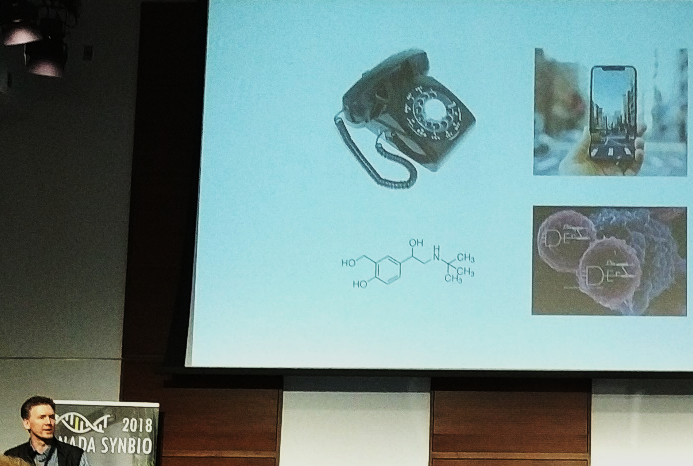
A fun analogy from Dr. Rob Holt (University of British Columbia) comparing small molecule therapy to synthetic biology.
On March 6th and 7th 2018, the first national conference on synthetic biology in Canada was hosted in Toronto. Organized by Ontario Genomics and Innovation, Science and Economic Development Canada (ISED), the conference brought together over 275 students, professors, industry leaders, and policy makers from across the country, and from the UK and US.
The event was split into two days, with the first day focusing on synthetic biology (synbio) success stories in Canada, and comparisons to how other countries have fostered their own synbio community.
This blog post will summarize the presentations and discussions of the first day, with some additional thoughts from the SynBio Canada Steering Committee. A blog post about the second day, which focused directly on how synbio can be fostered and strengthened in Canada, will follow tomorrow. We also encourage you to read Ontario Genomic’s summary, and Dr. Shawn Lewenza’s summary on his own site.
Opening Remarks
The conference was kicked off with encouraging statements from Ihor Boszko and Marc LePage, representing Ontario Genomics and Genome Canada respectively. Mona Nemer, the recently appointed Chief Science Advisor of Canada, also stated her support via video. She explained that the interdisciplinary nature of synthetic biology is precisely the sort of science she’s excited about, and that she too has a background in DNA synthesis.
Keynote: Engineering Biology in the Era of Genomics
Replacing the usually staid nature of academic conferences, Bill Peck the CTO and Co-Founder of Twist Bioscience, was welcomed to the stage with a rousing rock intro of Smoke on the Water by Deep Purple. Bill discussed how synthetic DNA is enabling a move beyond a reliance on petrochemicals to create energy, fuel, and plastics. He also discussed Twist’s collaboration with Microsoft and the University of Washington to use DNA as data storage, which faithfully stored jazz music. He also used an interesting analogy, explaining that each human body has many orders of magnitude more information than all of the digital data hosted on Facebook.
Keynote: Building a Successful Synthetic Biology Ecosystem
The second keynote address was particularly interesting to those of us working to strengthen synbio in Canada. Stephen Chambers, the CEO of SynbiCITE in the UK, gave a detailed overview of how the field has received significant support in his country. His definition for synbio, which is one of the easiest to grasp, was that synbio “is using biology to build useful stuff.”
Stephen described how political leadership in the UK has been the driving force behind the country’s strong support for the field. Synbio was identified as one of eight technologies that the UK must invest in, to remain competitive in the 21st century. By betting on specific technologies, not applications, the UK government avoided “picking winners”, which is a common criticism of government-led investments.
“Most people aren’t interested in the technology, they’re interested in the benefits.” – Stephen Chambers, CEO of SynbiCITE
He then went on to describe the mission of SynbiCITE, which is to nucleate synbio applications in the UK. By focusing on jobs and wealth creation as a direct result of synbio investment, SynbiCITE has made a strong case for supporting synbio at a national level.
An overview of synbio entrepreneurship since the launch of SynbiCITE revealed that 37 new companies had been created and sustained, receiving £13M in grants and £234M in private investment. Importantly, SynbiCITE found that these companies were specifically concentrated nearby the synbio accelerators that had been founded, showing a direct positive impact on local economies wherever synbio is supported.
Stephen also imparted specific lessons learned:
1) What drives science, doesn’t drive business
2) Build on local capabilities
3) Synbio needs both public and private investment to flourish
Panel Summaries
There were many great discussions throughout the day, but to keep things brief, here are a few quotes from the various panels.
AI and Computation Meet Synthetic Biology
“First computing chemistry in silico…and then finding the organisms and genes which create these chemicals.” - Nathan Magarvey of McMaster University and Adapsyn Bioscience discussed his work to discover next generation therapeutics.
“What if you could google the next drug?” – Ratmir Derda, University of Alberta and 48 Hour Discovery. A fun presentation involving a water bottle, showing how an entire chemical library could be rapidly screened by genetically encoding molecules.
Reducing our Carbon Footprint with Synthetic Biology
“A 100% reduction in greenhouse gases and 67% reduction in energy costs.” - Cathy Hass from BioAmber discussed the many benefits of switching from petroleum based production to biology based production of succinic acid.
“Microbes may have already solved our problems for accessing and storing resources.” – Steve Hallam, University of British Columbia
Human Health – From Gene Editing to Stem Cells
“A lot of work still to do understanding (cellular signaling) pathways, and then moving to building new ones.” – Peter Zandstra, University of British Columbia, discussed the current promise and challenges facing the development of new cellular therapies.
“We need to build immunotherapy capability in Canada, so we are not beholden to multinational drug companies.” – Rob Holt, University of British Columbia, showcased the exciting immunotherapy studies currently being performed in Canada, and the need for a national strategy to ensure the country has the capacity to use this breakthrough therapy.

Vincent Martin (Concordia University) identifying a big hurdle facing synthetic biology, which The Centre for Applied Synthetic Biology is working to solve with their genome foundry.
Writing Genomes
“What are you going to build (with DNA) and why?” – Leslie Mitchell from NYU and the Sc2.0 project imparts the lessons she learned from designing custom organisms.
“Ethics is mostly about why yes to do something, not no.” – Vardit Ravitsky from Université de Montréal on the benefits of engaging early with bioethics. “Avoid sensationalist language…take the lead in debating the implications of your research.”
“We work to engineer complex phenotypes.” – Vincent Martin from Concordia University on the many applications of the genome foundry at his institution. He specifically stressed the importance to engage in the GPWrite project, and wants to host a meeting in Canada in August 2018.
VC Investor Showcase
Taking an idea beyond the lab is daunting, especially when developing a business around it. Ken Nickerson from OMERS Ventures imparted advice for scientists/entrepreneurs, stating that although it may seem that entrepreneurs are beholden to investors, it’s the investors who are desperate to find good ideas to support.
Food Biotech 2.0 and Learning from GMOs
“Need efficient, predicable, consistent regulatory frameworks (for GM crops).” – Ian Affleck, CropLife Canada
“What does it mean to scientists to innovate responsibly?” – Jennifer Kuzma, Visiting Research Chair at the University of Ottawa, poses a challenging question to the audience.
“90% of surveyed consumers had high likelihood to buy. The other 10% wanted chocolate dip, or red ones.” - Neal Carter from Okanagan Specialty Fruits discusses their Arctic Apples product, which are apples that do not brown.
SynBio Start-Ups
The final panel of the day was a showcase of the diverse synthetic biology start-ups from across the country.
Bougimil Karas, CEO of Designer Microbes discussed their work developing proprietary vectors for cloning and maintaining large DNA fragments. They’re interested in fostering year-long collaborations with academics, and are particularly interested in soil microbes.
David Lloyd, CEO of Fredsense posed the question “do you know what’s in your water?”. There’s a $22B market for chemical testing, but it usually takes days to get results. They’re working to create modified organisms that can detect contaminants within an hour.

Hans-Joachim Wieden showing off the impressive synthetic biology community at the University of Lethbridge.
Hans-Joachim (HJ) Wieden, Director of SynBridge discussed the need to “support a community of practice”. He has helped create a space for synthetic biology students, enthusiasts, and entrepreneurs to test their ideas in a real lab. SynBridge is part of a greater synthetic biology community, centered at the University of Lethbridge.
Justin Pahara, CSO of Amino Labs talked about how they’re interested in “not the what but the who of synthetic biology.” Amino Labs creates kits for after school programs and public workshops to foster a do-it-yourself style of education. Interestingly, he stated that New Brunswick has by far the most active hands-on synbio community in Canada.
Kevin Chen, CEO of Hyasynth Bio showcased their efforts to create yeast which produce therapeutic cannabinoids. Through synthetic biology, they aim to tackle the $6B blackmarket for cannabis, and address the issues of scale facing the extraction of cannabinoids.
Leo Wan, CEO of Ranomics discussed their gene library service, offering targeted mutagenesis for up to 15 kb of gene. This aims to revolutionize biologics development, and how we understand how proteins function.
Pratish Gawand, CEO of Ardra Bio showed how natural ingredients can be obtained by engineering cells to produce them, rather than extracting them from crude oil. Instead, all it takes is the right engineering cell and some sugar.
Final Thoughts
It should be noted that these seven start-ups represent the entirety of the current synbio entrepreneur community in Canada. This is compared to the 37 companies that have been formed in the UK, thanks to dedicated financial support from the UK government. Canada clearly has a lot of catching up to do, and this conference was a step in the right direction. In many cases, this was the first time that members of the Canadian synbio community were meeting face-to-face, which is key to develop strong research and business relationships going forward.
The support voiced throughout the conference by policy makers and granting agencies was very encouraging, and SynBio Canada is excited to contribute to making a stronger synbio community. The second day of the conference, a smaller closed-doors meeting, directly focused on what Canada must do to support synthetic biology at a national level. Members of the SynBio Canada steering committee participated in these discussions, which will be summarized in a future blog post.
The SynBio Canada Steering Committee would like to thank Ontario Genomics and ISED for hosting an engaging conference! Stay tuned for our summary of Day 2.
Undergraduates Bringing Synthetic Biology to Life at Western
As the synthetic biology scene grows at Western University (London, Ontario), the Western Synthetic Biology Research Program (WSBR) is giving undergraduates the opportunity to design and create their own functional living systems.
SAMIR HAMADACHE - FEBRUARY 25, 2018
By the students, for the students

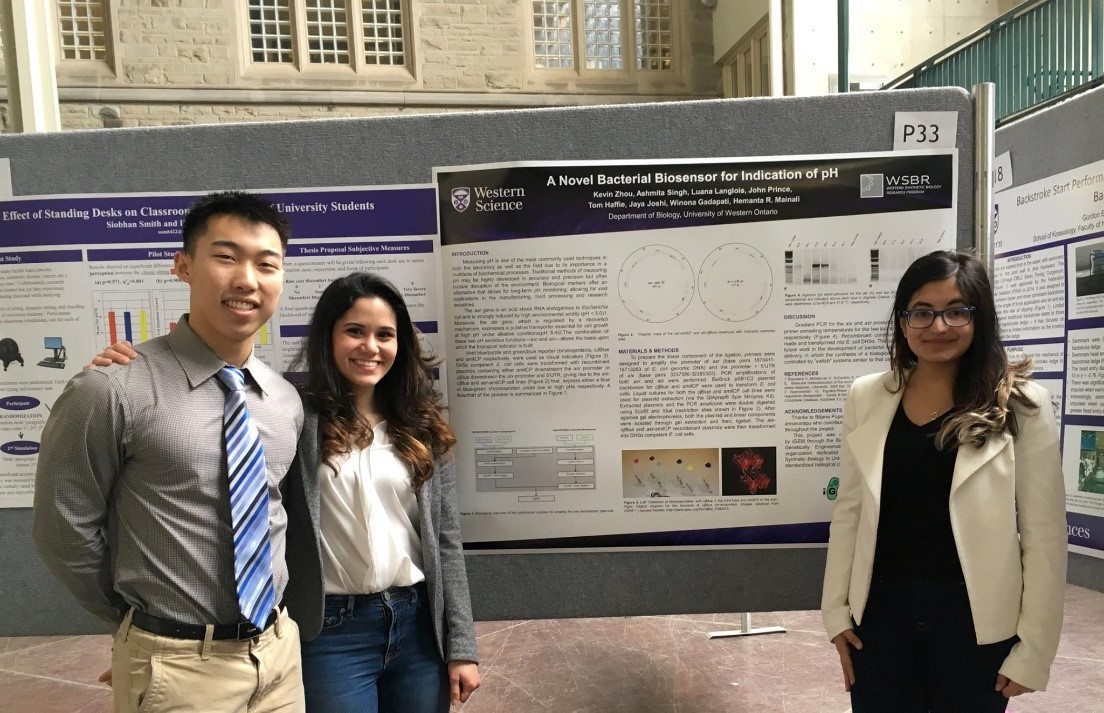
WSBR student directors presenting their work at Western Research Forum 2017. (from left to right: Kevin Zhou, Luana Langlois, Ashmita Singh)
As the synthetic biology scene grows at Western University (London, Ontario), the Western Synthetic Biology Research Program (WSBR) is giving undergraduates the opportunity to design and create their own functional living systems.
The WSBR club was founded in 2016 by a group of first-year students aspiring to create a team for the International Genetically Engineered Machine (iGEM) competition. Today, WSBR is facilitating two independent student projects, coordinating a focussed journal club (“SynBio Talks”), introducing high school students to synthetic biology, hosting a case competition (“SynBio Hacks”), and working with Faculty to create an Honors Specialization in Synthetic Biology.
“WSBR started from a desire to see more people getting the same opportunities that we did,” said third-year honors genetics & biochemistry student, Luana Langlois, co-founder and now Co-President of WSBR. While working on their iGEM project, Luana and her peers discovered that there was a lot of interest in synthetic biology among Western students and researchers alike. As a result, they formed WSBR to give the opportunity to more undergraduates to make their own synbio idea come to life.
When WSBR first opened its doors to new members in late 2016, over 200 students applied within the span of one week. New members could meet like-minded synthetic biology enthusiasts, learn about ongoing initiatives, develop new skills, and launch their own projects.
While student leadership is at the heart of the program, WSBR is endorsed and supported by Western’s Departments of Biology and Biochemistry. Members are provided with lab space, equipment, funding, and most importantly mentorship. Graduate students and faculty members from the two departments volunteer by assisting the undergraduates with their projects, answering their questions, and teaching them new skills.
Where are they at? Just getting started!
According to its website, WSBR “[performs] scientific research in order to tackle major issues such as climate change, energy production, and personalized medicine”. This is achieved by genetically engineering algal and bacterial model organisms to carry out desired functions.
Currently, there are two teams of students working on separate projects.
One team is in charge of developing novel biological tools to enhance the rate of conjugation (DNA transfer) between algae and bacteria. Such tools would facilitate the synthesis of large artificial chromosomes and increase the versatility of eukaryotic systems. The other group is working on increasing the tolerance of algae to acidic environments. This is environmentally relevant as the acidification of oceans and lakes, largely resulting from atmospheric pollution, threatens algal communities and the stability of aquatic ecosystems.
Past projects include enhancing carbon and nitrogen metabolism in the nitrogen-fixing bacterium S. meliloti, engineering E. coli to serve as a visible indicator of pH levels, and similarly, engineering E. coli as an indicator of temperature levels.
Outside of the lab, WSBR is also involved in outreach and academic initiatives. SynBio Talks is a journal club, where anyone interested in synthetic biology can meet and discuss recent publications in the field. Representatives from WSBR also sit on a task force of Western’s Biology and Biochemistry Departments that is developing an undergraduate specialization in synthetic biology.
Stepping up to the challenge: the WSBR’s case competition and iGEM team.
SynBio Hacks is the WSBR’s case competition. Introduced in late 2017, it is aimed at bringing new students to the lab so that they, too are given the possibility to bring innovative ideas to life. While the competition is only open to Western students for its pilot year, Luana sees the potential for expansion in future years.
Participating teams of 4 will present thesis proposals to a panel of judges comprised of faculty members. In addition to designing a practical application for synthetic biology, teams will be expected to consider funding, timelines, required iGEM kit parts, and other logistic parameters. This year’s theme is “Eutrophication: the suffocating effects of climate change”.
Although WSBR was born out of an effort to create an iGEM team, Western does not currently have an official representative team. Other universities in Ontario, such as Waterloo and McMaster, have established quite successful iGEM teams. WSBR is in the process of creating a new division, “UWO iGEM”, for the purpose of representing Western in the international competition.
“I see WSBR growing into a big program, and Western becoming a centre for synthetic biology,” Luana enthused. “I want to see people interested in [synthetic biology], and applying it in their careers.”
I look forward to seeing WSBR keep growing!
Learn more about WSBR at www.uwo-wsbr.com.