
Interview with Angela Quach - Concordia Genome Foundry
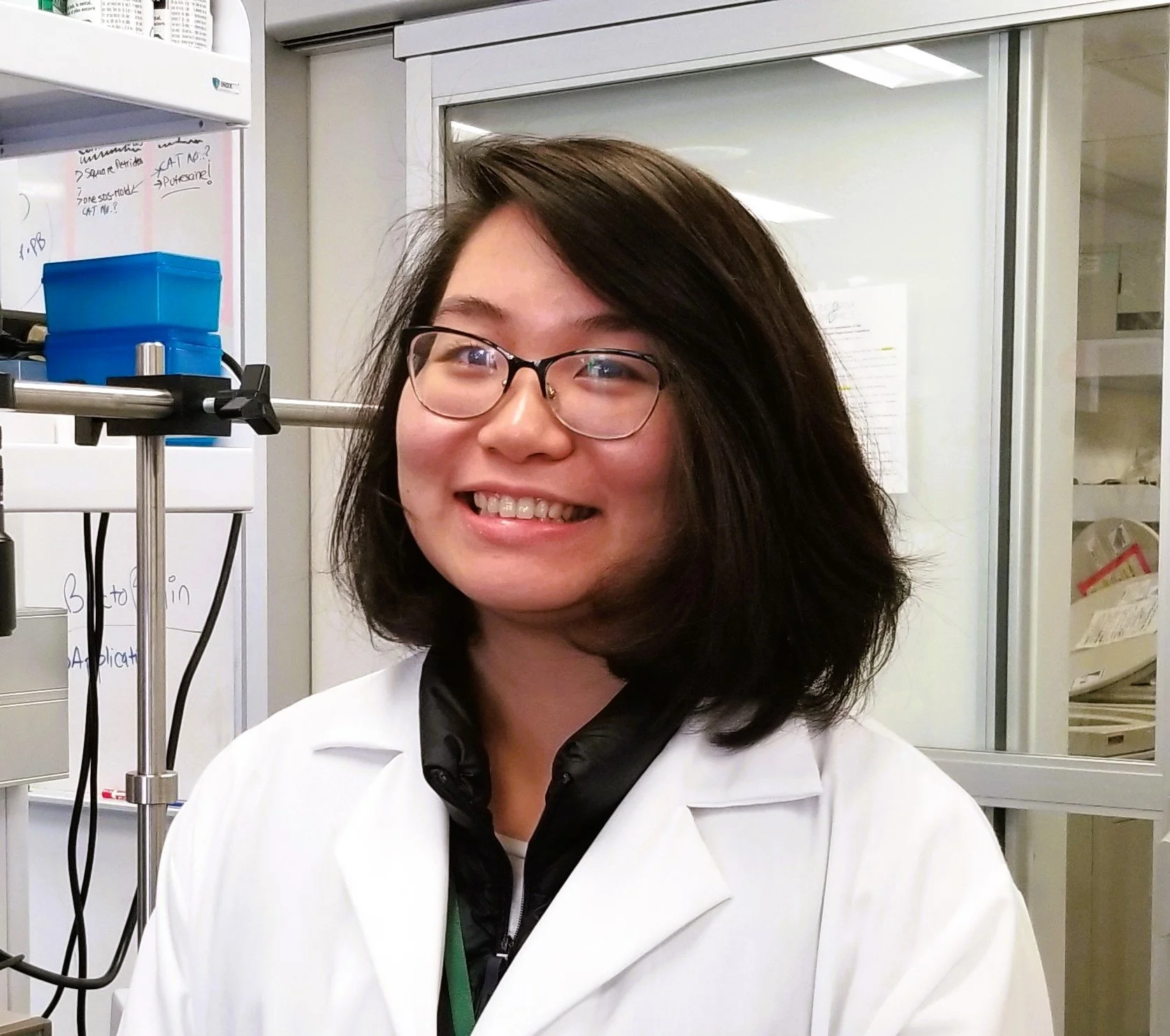

Design. Build. Test. Repeat.
How the Genome Foundry is Accelerating the Future of Synthetic Biology.
What first sparked your interest in synthetic biology, and how did that interest shape your career path leading to the Genome Foundry?
My undergraduate research project and graduate studies were focused on building a platform to gene-edit mammalian cells on a microfluidics chip. Synthetic biology was the natural home for that kind of work — a field where you're not just studying biology but actively redesigning it to do something new. I was drawn to the idea of combining genetic therapy with miniaturized devices to automate biological reactions. Right after finishing my Master's, the Concordia Genome Foundry had an opening to develop a high-throughput gene-editing platform for induced pluripotent stem cells, which was an almost perfectly timed transition given what I'd been working on. Since joining the CGF, I've come to appreciate just how essential lab automation is for scaling up experiments and honestly, that's what got me fully invested in synthetic biology. Once you see how much further you can push a research question when the automation is there to back you up, it's hard to imagine working any other way.
For those who may be unfamiliar with it, how would you describe synthetic biology, and what role does the Genome Foundry play in advancing synthetic biology research and innovation?
Synthetic biology is essentially the practice of applying engineering principles to biology — designing and building biological systems with a purpose in mind, whether that's producing a molecule, correcting a genetic defect, or developing a new therapeutic. At the Concordia Genome Foundry, we're set up specifically to support that kind of work at scale. The Foundry model is built around the Design-Build-Test cycle — the idea that biological innovation moves fastest when you can rapidly iterate between designing a genetic construct, building it, and testing whether it does what you intended. What makes the CGF particularly valuable to the research community is that we have the infrastructure, expertise, and automation capabilities to support multiple projects across different labs and disciplines simultaneously, accelerating research that would otherwise be constrained by time and resources.
Synthetic biology increasingly relies on automation, high-throughput workflows, and interdisciplinary collaboration. How does the Genome Foundry leverage these capabilities to accelerate research and development?
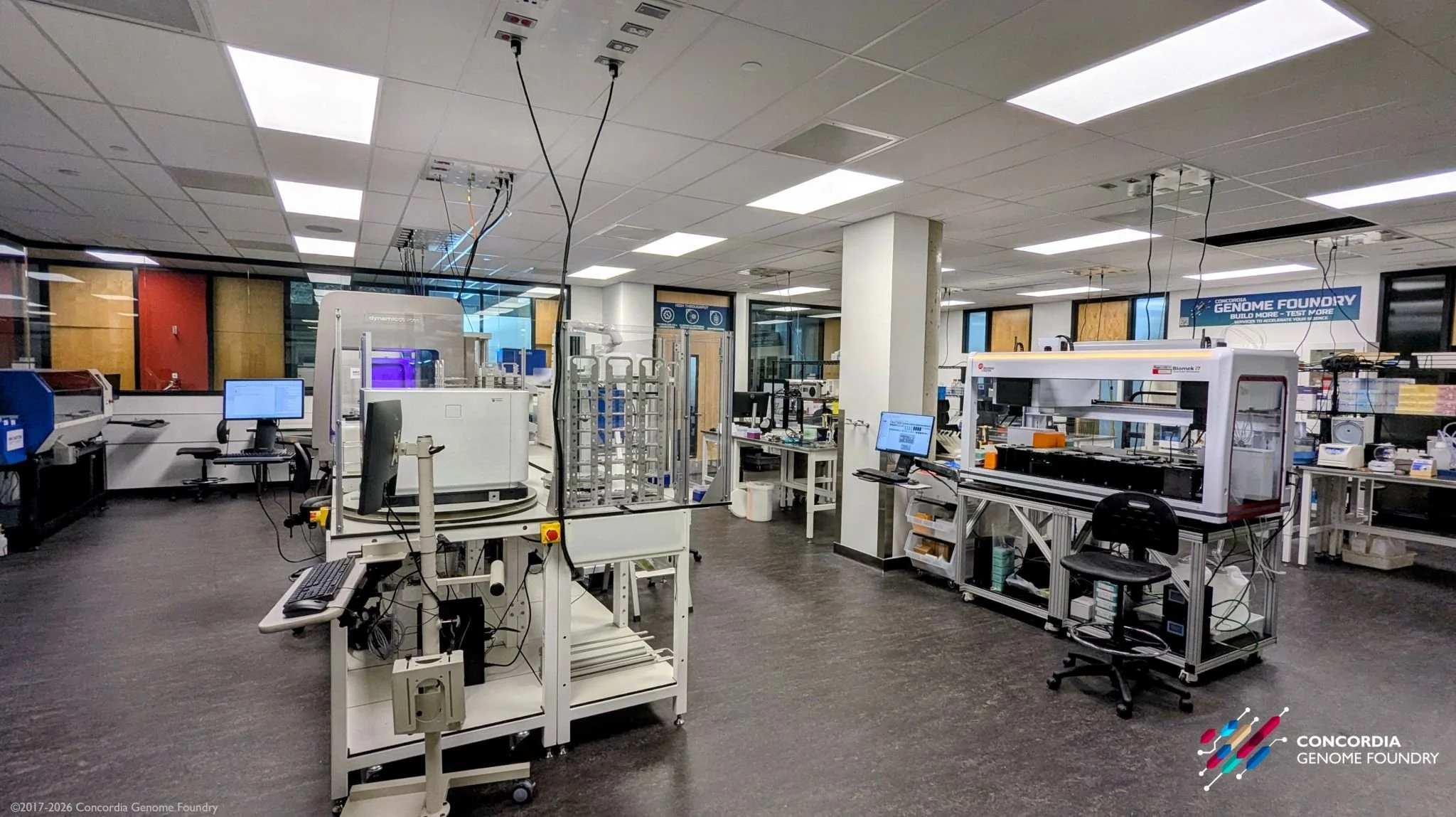
© Concordia Genome Foundry
Automation and high-throughput workflows are really at the core of how the CGF operates. Having the infrastructure to run complex, multi-step biological protocols in a reproducible and scalable way is what allows us to take on ambitious projects that would be difficult to execute in a traditional lab setting. But beyond the hardware, what makes it really powerful is the interdisciplinary nature of the team — biologists, lab automation specialists, and computer scientists working together means that we can not only execute complex experiments but also make sense of the data that comes out of them — tracking and organizing results like being able to sequence upwards of 10,000 clones and knowing how to re-array them into specific subsets based on their genetic profile. That combination of skill sets isn't just a strength, it's what's needed to operate a platform like this, and it's what allows us to bridge academic research and real-world application. A research question that starts in a university lab can move through our workflows and come out the other side as something with genuine translational potential — whether that's a therapeutic strategy, a bioprocessing solution, or a validated platform that an industry partner can build on. Interdisciplinary collaboration isn't just a feature of how we work, it's what makes that translation possible.
What opportunities exist for students and trainees to gain hands-on experience in synthetic biology through the Genome Foundry, and what skills are most valuable for those hoping to enter the field?
The Genome Foundry is a great environment for students and trainees because the work is inherently hands-on. We offer training on a wide range of instruments, from flow cytometers and cell sorters to liquid handlers and other automated platforms, giving everyone exposure to tools they might not encounter in a typical lab setting. On the software side, trainees also get exposure to programming and bioinformatics, which are becoming increasingly essential in synthetic biology. Beyond operating equipment, trainees also get to be part of the method development process, working alongside us to figure out how to best automate workflows for their research. As for skills that are most valuable for entering the field — having a solid foundation in biology matters, but adaptability and a willingness to work across disciplines are just as important. Synthetic biology rarely stays within the boundaries of a single expertise, so curiosity and a hands-on mindset are really what set people apart.
What developments in synthetic biology are you most excited about over the next decade, and how do you see facilities like the Genome Foundry helping translate new discoveries into real-world applications?
One of the things I'm most excited about is the growing role of AI and machine learning in biological design — the idea that we can start to predict how a genetic construct will behave before we ever build it is a real shift in how synthetic biology is practiced. What excites me even more is what comes next: taking something designed in silico and being able to rapidly move it into the lab for testing. That's really where facilities like the Genome Foundry come in, we're the bridge between the computational and the physical. As these design tools become more sophisticated, having the infrastructure to validate and iterate on those designs quickly is going to be essential. The faster that loop can close, the faster discoveries can move toward something real and impactful.
Interviewer: Caitlin Oh
