

Dr. Adam Damry
We're a newly established lab looking at how proteins behave at solid interfaces. Most of our understanding of protein science comes from fluid environments. However, solids are another incredibly relevant medium to modern biotech applications, and we don't yet have a strong understanding of how proteins interact with them.

Assistant Professor, University of Ottawa
Email Address: adam.damry@gmail.com
Bio: We're a newly established lab looking at how proteins behave at solid interfaces. Most of our understanding of protein science comes from fluid environments. However, solids are another incredibly relevant medium to modern biotech applications, and we don't yet have a strong understanding of how proteins interact with them.
Our research program aims to start filling in these holes using whatever tools we can find, make, or dream up. With so much of the landscape uncharted, we'll be pioneers of sorts, but that's the exciting part! Along the way, we'll use what we learn to create biological tools with real world applications. From plastic degrading enzymes for bioremediation and recycling to immobilized enzymes in personalized medical devices to functional enzyme-linked scaffolds for industrial processes, the possibilities are endless.
Website: www.damrylab.com

Dr. Steven Hallam
Dr. Hallam directs the ECOSCOPE innovation ecosystem consisting of an NSERC CREATE training program, a research network, a core facility for high-throughput screening and a curriculum development initiative in data science based on four research and training pillars.

Professor, University of British Columbia
Email Address: shallam@mail.ubc.ca
Bio: Dr. Steven Hallam is a University of California Santa Cruz and MIT trained molecular biologist, microbial ecologist, entrepreneur, and innovator with over 20 years experience in field and laboratory research at disciplinary interfaces. He is a Professor in the Department of Microbiology and Immunology, former Canada Research Chair in Environmental Genomics and a Leopold Leadership Fellow. He is also a program faculty member in the Bioinformatics and Genome Sciences and Technology training programs at UBC.
Dr. Hallam directs the ECOSCOPE innovation ecosystem consisting of an NSERC CREATE training program, a research network, a core facility for high-throughput screening and a curriculum development initiative in data science based on four research and training pillars: i) microbial ecology, ii) biological engineering, iii) data science, and iv) networking and entrepreneurship. His research intersects these program pillars with specific emphasis on the creation of functional screens and computational tools that reveal hidden metabolic powers of uncultivated microbial communities with direct application to biocatalyst discovery and pathway engineering.
Website: http://ecoscope.ubc.ca
Twitter: @HallamLab

Dr. Sateesh Kagale
We are utilizing Synthetic Biology tools for improving the productivity of agricultural crops. Specifically, we apply precise gene editing tools to improve tolerance to pests, diseases and abiotic stress of economically important agricultural crops, such as wheat, canola and pulse.
Team Leader, National Research Council Canada
Bio: We are utilizing Synthetic Biology tools for improving the productivity of agricultural crops. Specifically, we apply precise gene editing tools to improve tolerance to pests, diseases and abiotic stress of economically important agricultural crops, such as wheat, canola and pulse.
Website: www.nrc.ca
Twitter: @sateeshkagale

Dr. Bogumil Karas
Research in the Karas lab is focused on developing innovative genetic tools to enable the engineering of microbes to produce medicines, DNA storage technologies, food and next-generation fuels.
Assistant Professor, Biochemistry, University of Western Ontario / CEO Designer Microbes
Email Address: bkaras@uwo.ca
Bio: Research in the Karas lab is focused on developing innovative genetic tools to enable the engineering of microbes to produce medicines, DNA storage technologies, food and next-generation fuels. We are using a multi-host system to perform in vivo gene deletions, additions and replacements. This approach was designed to take advantage of existing genetic tools developed for model organisms, including Escherichia coli and Saccharomyces cerevisiae. Currently, we are developing novel tools for eukaryotic algae: Phaeodactylum tricornutum, Thalassiosira pseudonana and soil bacterium Sinorhizobium meliloti.
Website: https://www.schulich.uwo.ca/biochem/people/bios/Karas.html
Twitter: @BogumilKaras

BioZone
BioZone aims to use Bioengineering to create a sustainable world by making industrial processes more sustainable, remediating humanity's environmental impact, and improving health outcome.

BioZone, Faculty of Applied Science and Engineering, University of Toronto
Bio: BioZone is a Centre for Applied Bioscience and Bioengineering Research at the University of Toronto’s Faculty of Applied Science and Engineering.
BioZone aims to use Bioengineering to create a sustainable world by making industrial processes more sustainable, remediating humanity's environmental impact, and improving health outcome.
For example, to help make industrial processes more environmentally friendly and reduce carbon emissions, we help companies replace petroleum feedstocks with renewable sources, including waste material from agriculture and forestry sectors, by engineering microbes and enzymes that can convert sugars or complex organics (lignin) into value-added chemicals and materials.
BioZone's synbio relevant skills include metagenomics, enzymology, functional genomics, enzyme engineering, metabolic and whole cell modeling, systems biology, computational biology, bioprocess design, techno-economic assessment, and lifecycle analysis.
Website: www.biozone.utoronto.ca
Twitter: @BioZoneUT

Dr. Ahmad Saleh
Synthetic biology strategies for the biosynthesis of fine chemicals, especially lipid-based drugs and biofuels
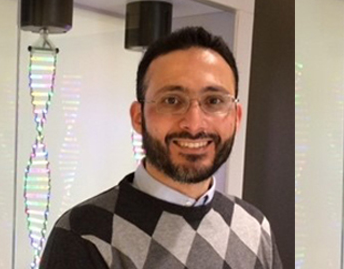
Assistant Professor, Université Laval
Email Address: ahmad.saleh@bcm.ulaval.ca
Bio: Our research projects aim at developing synthetic biology strategies for the biosynthesis of fine chemicals, especially lipid-based drugs and biofuels, to render them accessible for human consumption. In addition, we work on the discovery/invention of new fine chemicals that satisfy emerging human needs in health, energy and bioremediation fields. Our research is conducted using synthetic biology (SB) approaches in microbial hosts as platforms, while aiming at a sustainable production of safe and ecological fine chemicals.
Website: http://abdel-mawgoud.com/

Dr. Valerie Ward
We aim to engineer microalgae to produce proteins for medical and industrial uses as well as engineer metabolic pathways in microbial platforms for the production of isoprenoids.

Assistant Professor, University of Waterloo
Email Address: vward@uwaterloo.ca
Bio: We aim to engineer microalgae to produce proteins for medical and industrial uses as well as engineer metabolic pathways in microbial platforms for the production of isoprenoids.
Website: https://uwaterloo.ca/chemical-engineering/profile/vward

Dr. Vikramaditya Yadav
The principal theme of Prof. Yadav’s research is the utilization of metabolic & enzyme engineering to investigate and customize novel biosynthetic enzymes that can convert biomass-derived feedstocks into value-added chemicals.

Associate Professor of Chemical, Biological & Biomedical Engineering & Program Director of Sustainable Process Engineering, University of British Columbia
Email Address: vikramaditya.yadav@ubc.ca
Bio: Vikramaditya G. Yadav is an Associate Professor in the Department of Chemical & Biological Engineering and the School of Biomedical Engineering and Director of the Master of Engineering Leadership in Sustainable Process Engineering at the University of British Columbia (UBC). Prof. Yadav leads one of Canada’s foremost research groups on synthetic biology and industrial biotechnology. The principal theme of Prof. Yadav’s research is the utilization of metabolic & enzyme engineering to investigate and customize novel biosynthetic enzymes that can convert biomass-derived feedstocks into value-added chemicals. His group also extends the principles of metabolic engineering to the design and development of unique bioremediation strategies to rehabilitate the water quality in and around industrial zones and develop new mining biotechnologies. In addition to green engineering, his research group also pursues medical biotechnology research, wherein they primarily focus on assay development, biosynthetic engineering, and pharmaceutical product development. Prof. Yadav’s research program is distinguished by its impact and strong emphasis on technology translation. Prof. Yadav has successfully raised over $5 million in research funding and his group collaborates with numerous industry partners from a range of sectors. He is also the Chair of the Biotechnology Division of the Chemical Institute of Canada and an Associate Editor of the Canadian Journal of Chemical Engineering. He was previously an Associate Scientific Advisor for Science Translational Medicine. He also founded Metabolik Technologies Inc. and was its Chief Technology Officer until it was recently acquired by Allonnia, a Bill Gates-backed environmental biotechnology company. Metabolik is widely regarded as a Canadian success story and was developing a first-of-its-kind bioremediation platform for decontaminating oil sands process-affected water. He is also the Chief Technology Officer and Chairman of ArqMetal Inc., which is developing biotechnological solutions for the mining industry. He also serves on the boards of InMed Pharmaceuticals and Reazent.
Website: www.biofoundry.ca
Twitter: @biofoundry