

Dr. Laura Keffer-Wilkes
I am the primary investigator for the Lethbridge high school iGEM team and the manager of SynBridge, the U of L's synthetic biology maker space.
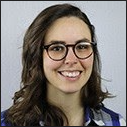
Instructor & lab manager, University of Lethbridge
Email Address: kefferwilkesl@uleth.ca
Bio: I am the primary investigator for the Lethbridge high school iGEM team and the manager of SynBridge, the U of L's synthetic biology maker space.
Website: https://www.uleth.ca/core-facilities/synthetic-biology
Twitter: @LethHS_iGEM @SynBridge @InnovationRNA

Dr. Jimin Guo
We develop new methods in the domains of Genomics and Synthetic Biology, using microfluidics and computational biology.
Research Officer, National Research Council Canada
Bio: We develop new methods in the domains of Genomics and Synthetic Biology, using microfluidics and computational biology.

Dr. Valerie Ward
We aim to engineer microalgae to produce proteins for medical and industrial uses as well as engineer metabolic pathways in microbial platforms for the production of isoprenoids.

Assistant Professor, University of Waterloo
Email Address: vward@uwaterloo.ca
Bio: We aim to engineer microalgae to produce proteins for medical and industrial uses as well as engineer metabolic pathways in microbial platforms for the production of isoprenoids.
Website: https://uwaterloo.ca/chemical-engineering/profile/vward

Dr. Vikramaditya Yadav
The principal theme of Prof. Yadav’s research is the utilization of metabolic & enzyme engineering to investigate and customize novel biosynthetic enzymes that can convert biomass-derived feedstocks into value-added chemicals.

Associate Professor of Chemical, Biological & Biomedical Engineering & Program Director of Sustainable Process Engineering, University of British Columbia
Email Address: vikramaditya.yadav@ubc.ca
Bio: Vikramaditya G. Yadav is an Associate Professor in the Department of Chemical & Biological Engineering and the School of Biomedical Engineering and Director of the Master of Engineering Leadership in Sustainable Process Engineering at the University of British Columbia (UBC). Prof. Yadav leads one of Canada’s foremost research groups on synthetic biology and industrial biotechnology. The principal theme of Prof. Yadav’s research is the utilization of metabolic & enzyme engineering to investigate and customize novel biosynthetic enzymes that can convert biomass-derived feedstocks into value-added chemicals. His group also extends the principles of metabolic engineering to the design and development of unique bioremediation strategies to rehabilitate the water quality in and around industrial zones and develop new mining biotechnologies. In addition to green engineering, his research group also pursues medical biotechnology research, wherein they primarily focus on assay development, biosynthetic engineering, and pharmaceutical product development. Prof. Yadav’s research program is distinguished by its impact and strong emphasis on technology translation. Prof. Yadav has successfully raised over $5 million in research funding and his group collaborates with numerous industry partners from a range of sectors. He is also the Chair of the Biotechnology Division of the Chemical Institute of Canada and an Associate Editor of the Canadian Journal of Chemical Engineering. He was previously an Associate Scientific Advisor for Science Translational Medicine. He also founded Metabolik Technologies Inc. and was its Chief Technology Officer until it was recently acquired by Allonnia, a Bill Gates-backed environmental biotechnology company. Metabolik is widely regarded as a Canadian success story and was developing a first-of-its-kind bioremediation platform for decontaminating oil sands process-affected water. He is also the Chief Technology Officer and Chairman of ArqMetal Inc., which is developing biotechnological solutions for the mining industry. He also serves on the boards of InMed Pharmaceuticals and Reazent.
Website: www.biofoundry.ca
Twitter: @biofoundry

SynBioApps NSERC-CREATE program
SynBioApps offers graduate training in the various technologies of synthetic biology, including work in Concordia University’s Genome Foundry.

SynBioApps NSERC-CREATE program, Concordia University
Email Address: synbioapps@concordia.ca
Bio: SynBioApps offers graduate training in the various technologies of synthetic biology, including work in Concordia University’s Genome Foundry. Students are exposed to applied R&D in the context of industrial synbio applications and entrepreneurship. Further training includes ethical considerations; an understanding of regulatory environments and IP; network opportunities; and collaboration with business student to create product pitches.
Website: https://www.concordia.ca/sgs/programs/interdisciplinary/synthetic-biology-applications.html
Twitter: https://twitter.com/SynBioAppsCU